Watercolor pencils and crayons
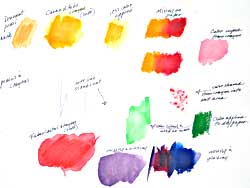 Exploring watercolor pencils and crayons with my class on Monday was verrrry interesting. I've used them seldom, tending to be a washy kind of watercolor painter. Also, my past observations led me to believe that they were extremely limited. I remember early experiences as a kid with Mongol watercolor pencils--they never had enough color in them and always left streaks. Some years ago I bought a lovely set of Derwent pencils and found them disappointing. But for some reason, through the years I've acquired two sets of watercolor crayons (Caran d'Ache and Faber Castell) that I never opened until Monday. I was hoping to be pleasantly surprised after re-reading two books over the weekend, Gary Greene's Painting With Water-soluble Colored Pencils (North Light, 2002) and Cathy Johnson's Watercolor Pencil Magic. (North Light, 2002). Both have lots of demos and illustrations of techniques. Greene's techniques are more painterly; Johnson's appear more doable for sketching and travel.
 And I was amazed. It was apparent that the Derwent pencils are harder than the sticks, but that made it easy to make a clean line where needed. The range of techniques was surprising --wet-in-wet; wet-on-dry; dry-on-wet and much more. You can lift color from the stick and apply it to paper. You can apply color to a sheet of extra paper and use it as a palette, lifting color and painting with it. I even scraped shavings from a stick onto damp paper and got the look of spatter. And the colors are brilliant. I wonder if Mongol pencils have improved since I used them many years ago.
There are numberous sites on the Web that give detailed technical information on techniques. Here are two: Watercolor Pencil Class 2 and
What are Watercolor Pencils?. For more, Google "watercolor pencils."
Labels: tutorials, watercolor crayons, watercolor pencils
posted by Nita at 7:38 PM
2 comments


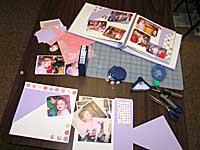
 My name is Nita. I'm a Scrapaholic. I've been scrapbooking for one day. I admit I enjoyed it. Here's my story. In 1998 I launched my web site
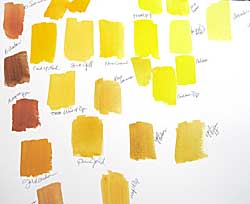
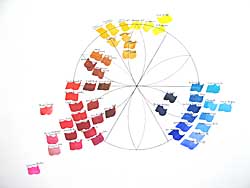
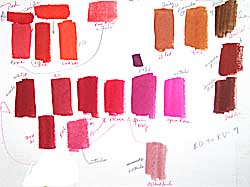 Last Monday we explored reds in watercolors, as we did last week with blues. Here's the chart that I did in class, explaining the paint characteristics of each pigment and the relative temperature as I went along. I let the class help me decide where a color belongs. I wish we had full-spectrum lighting in our classroom, because the colors tend to look "off" and I have to remember to mention this. Lighting makes a huge difference when you're exploring colors.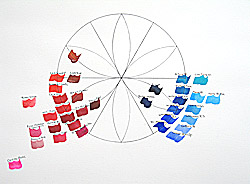
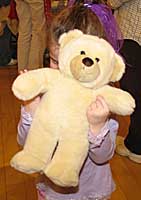
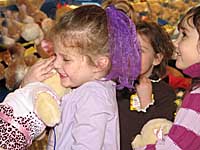 Yesterday was the Little Artist's fourth birthday party. She invited several little girls to Build-a-Bear at the mall. It was a lot of fun. They go out of their way to make it a good experience. A leader gathers them outside the store and they dance in together. Each child picks an unstuffed bear and names it. Jenna became shy at all the "birthday girl" attention and didn't name her bear. Next,there is a serious "heart ceremony," where the leader talks about love and they warm little red plastic hearts between their hands and put them into the birthday girl's bear. Then they warm little hearts and put them inside their own bears. The bear is stuffed by a machine as each child watches her bear fill out. It was fun to see the expressions on their faces. The leader asks them to give their bear a hug. Is it too hard? too soft? just right? Jenna's was just right and once her bear was stuffed, she was able to name her--Genevieve. There's a little grooming table where they can brush the bear before taking her shopping for an outfit. With the bears all dressed everyone gathers at the front of the store to receive hair bows and birth certificates with their bears' names on them and a house-shaped box with a handle to carry the bears home. The little girls pledged to take good care of their bears--oh, so serious were their faces.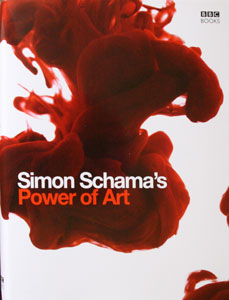
 A blog reader sent me an image (at right)that is apparently the UK cover of the book
 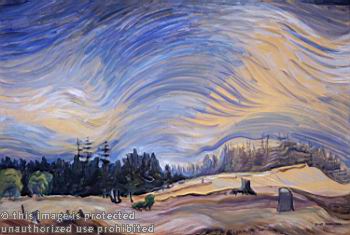 Several years ago I ran across the art of Emily Carr at the
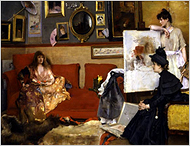 New York Times art critic Roberta Smith roamed the rooms of the Metropolitan to discover paintings of artists at work, a behind-the-image look at the artistic process as revealed in the paintings of artists of the past. This fascinating