Photoshop Elements class
 Hithergreen Center, where I teach my watercolor class, started a new session in Photoshop Elements 6 in November. The class is challenging, but so much fun. I've been into PSE since #1 came out, but my knowledge of the program has been limited to trial and error; I've gotten good results, but never could figure out how I did it. Reinventing the wheel, dontcha know? I've learned so much from Brook, the instructor, and her sidekick, Mary Lou, who have a firm grasp on the program. Some in the class have upgraded to PSE 8; my copy is sitting on my desk waiting to be installed. The class has a monthly contest based on one of the artistic filters in the program. My candy pic here was one of the winners this month. I tried something new I want to pass on, not related to PSE. When I set up the still life, I didn't want to use my flash (harsh shadows), so I dug out my little Ott task-light, which has full-spectrum fluorescent lighting. I turned out the studio lights and used only the task-light. It worked great. Wouldn't be good for a big setup, but perfect for this shot.
Labels: candy, full spectrum, hithergreen, ott light, photoshop elements
posted by Nita at 9:11 AM
3 comments


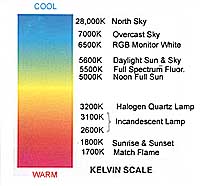 When I set up my studio in 1983 I consulted a lighting specialist who advised me to buy fluorescent lighting that was 5500 degrees Kelvin. Whatever that meant. I followed his advice and found that the lighting was ideal for my color studies and painting and have recommended to my students that they use this kind of lighting in their studios. A couple of weeks ago I showed my class what a difference it made in my color charts to see them under a portable Ott-lite. The classroom has regular fluorescent lighting in it. I went to the Internet and found several charts, which I combined into the one you see here. The best lighting for artwork is in the range of 5000-6000K. The Color Rendering Index (CRI) should be 70 or higher for excellent, 60-70 for good color matching. Anything under 60 is unacceptable. There are several companies that make lights that meet these specifications. Google
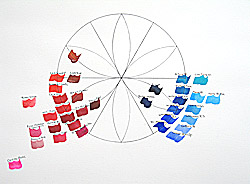
 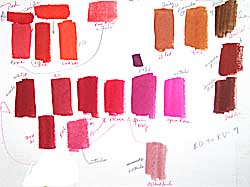 Last Monday we explored reds in watercolors, as we did last week with blues. Here's the chart that I did in class, explaining the paint characteristics of each pigment and the relative temperature as I went along. I let the class help me decide where a color belongs. I wish we had full-spectrum lighting in our classroom, because the colors tend to look "off" and I have to remember to mention this. Lighting makes a huge difference when you're exploring colors.