l s

Sunday, August 23, 2009

The Little Artist's house


Here are Jenna's house drawings. I took quick pix after the birthday party yesterday and there was all kinds of reflected light coming from somewhere. They're on white paper. There's so much detail, but it doesn't show up in the small image. What tickled me was the rainbow lines around the house and all the creatures, wild and domestic: a dog, monkey on a tree, turtle, small tiger, skunk, elephant, giraffe, a bird on the fence. She included a bicycle, a car in a garage, and a wagon with a baby in it. Mommy is calling to the baby from the window in the roof at the back. Flowers next to the fence and along the driveway, which she says is gravel, like theirs, therefore gray. The sun is exactly on the reverse side of where the sun is in the front. I was out of the room for most of it, but I gave her a start with the schematic for the house, hill, and driveway on a separate sheet of paper. She made the rest of it up. Is that creative, or what?

Labels: , , ,

Sunday, August 16, 2009

The Little Artist still at it

I haven't written about the Little Artist for a while. She's still prolific, and has added writing stories to her portfolio. I will be happy when she has vowels in her written words. She's a good reader, but writes entirely phonetically, so "catsup" comes out "ctsp." I'm sure she'll pick it up soon--she starts first grade in a week or so. In the meantime, she was drawing the other day and I asked if she had ever drawn a house. She said she didn't know how--people are her favorite subject. I drew a square with a triangle on top, sitting on a hill with an s-shaped driveway. She was off and running. She drew her house in crayon with multiple-colored lines, a rainbow house. It included rainbow doors and windows, chimney, smoke, and a car in the garage. A tree with a monkey in it, a little boy with a pet skunk, a turtle, a baby tiger, and, of course, the sun. Then, she turned the paper over and drew the back of the house. This picture included an elephant, a giraffe in the backyard, and a host of other animals. There was a mom in the upstairs window calling out to the baby in the wagon to be careful. She put in the sun on the reverse side in the same spot, meaning it was on the left in front and on the right in back. Her inclusion of details fascinates me. She usually has a story to relate about each thing she puts into the pictures. I wish I had photographed her drawings before she took them home.

Labels: , , ,

Sunday, July 13, 2008

Finding lines in the environment

Jerry Walter and his Photoshop group have been playing with more activities from The New Creative Artist. Here are his images and a description of the processes they're experimenting with.


"Just to bring you up to date. We are continuing reading The New Creative Artist, and developing little exercises as suggested by your text and illustrations. We all tried Page 48 Painted Paper Weaving with limited success (but we really learned something, which is what it is all about). It's a technique that can be done on the screen with two images and lots of concentration. We found that "weaving" two dissimilar images gave a very confusing result, probably because we didn't have the texture from the woven strips that one would have in real life. But we did have some good results with weaving two interpretations of the same image, like one with a red tone and another with a blue tone. Here the lines carried the theme and provided continuity. I don't have one of those handy or I'd send it along.

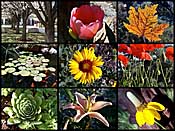
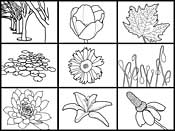
We also spent some time on Page 56 with Go Line-Spotting. That phrase "Look for lines and patterns in nature..." is absolutely loaded with possibilities. Here is my Photoshop results. There were some false starts, but soon it fell into place. Of course we are doing it differently -- we are actually tracing over the photo of the object with a small brush. Requires a lot of bookkeeping within the Photoshop format. And we're doing it with a "mouse" track on the screen, rather than the sophisticated way with a digital pen and tablet. And when we do it again, we'll work with a variety of brushes for more texture. But the results are quite amazing, a wonderful exercise all around, with a very interesting finished composite line drawing."

What a great way to train your eye to see shapes and lines in nature and the man-made environment. I can't wait to see what you dream up next.

Labels: ,

Thursday, July 12, 2007

Why do you paint or draw or write?

A friend recently asked me this question, specifically about writing. When artists and writers get together with their colleagues, this subject often comes up. Naturally there are many answers to the question, but the thing that always intrigues me is that so many believe that their response is the only "right" one and feel somehow morally superior to others who have different ideas. Here are some typical responses:

I paint or draw or write because:
1. I feel I have something to say and want to share it.
2. I am compelled to so I can feel fulfilled.
3. It pleases me and makes me happy.
4. It's my job.
5. ....Just because.

Is one of these the right answer? Of course not; there isn't one. There are a million reasons, one for every person who answers the question. Make up one that suits you and don't feel you have to explain or defend it. The only person who has to understand your motivation is you. And that is very important.

It's equally important to decide for yourself how you'll approach your tasks in painting, drawing, writing. Once again, there isn't a "right" way. Some people plan extensively before beginning, others meditate to get in the mood, and still others jump in and work without a plan. But here are some thoughts to help stimulate your creative juices regardless of your modus operandi.

First of all, do what you love. Henry Miller said, "Paint as you like and die happy." What more can I say?

Avoid distractions. Wow, a tough one, but it can be done. I stole time while my four children were in school to develop my art and write my books. It also means making choices about what NOT to do.

Get into your Creative Zone and stay there as long as you are working. Betty Edwards has some great techniques for accomplishing this in her right-brain drawing books.

Reward yourself. Sure, you can party when the project is finished, but give yourself a pat on the back or a treat whenever you put in time on it. Everything you do should be acknowledged as an accomplishment.

And finally, treat yourself with respect and admiration, regardless of what others might say about your work. It's yours--own it and love it.

"Teachers open the door, but you must enter by yourself."
Chinese proverb

Labels: , ,

Tuesday, April 10, 2007

New Drawing Book

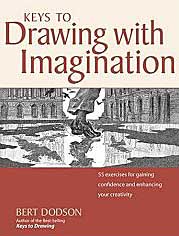
Bert Dodson, author of my favorite drawing book, Keys to Drawing has just released his new book, Keys to Drawing With Imagination.." The book is a humdinger. This is in no way an update or revision of his earlier book. The title truly indicates the direction the book takes from the very first doodle. Dodson first shows how you can begin with simple drawings or doodles and transform them by using a lightbox to duplicate, reverse, flip, combine and pattern your drawings with creative, imaginative results. "Doodling and noodling" is a recurring theme. Starting with the first doodle, Dodson shows how to play with line and pattern and make them morph and grow into imaginative creations. His variations on drawing principles are engaging and the activities are fun and exciting. But I don't think this is a book for beginners. His first book covers all that. This new book is for more advanced artists who need a diversion when they're stuck, ways to transform ho-hum drawings, and challenges for more creative techniques. Dodson showcases the work of several designers, who have no doubt done a lot of doodling and noodling on their way to the top. The spiral binding makes it easy to work with the book on the drawing table. Prepare to be amazed at what you can do with a doodle.

Labels: ,

Monday, January 29, 2007

Drawing book review

Bert Dodson's new book Keys to Drawing With Imagination. (North Light, 2006) is subtitled "Strategies and Exercises for Gaining Confidence and Enhancing Your Creativity." This may be my new favorite drawing book--sounds like a perfect fit with The New Creative Artist. The book is reviewed on Charley Parker's Lines and Colors blog.

Labels: , , , ,

Wednesday, August 30, 2006

Catching up on my reading

I've been so busy with my own book that I've fallen behind in writing reviews for books I've read. So I'm in "review mode." I posted two reviews this morning, but I'm up to seven now, so scroll down to see what's new.
Gerald Brommer In Emotional Content: How to Create Paintings That Communicate Gerald Brommer discusses the differences between classic, intellectual and romantic approaches to painting. The key question is "What do you feel?" for the artist who wishes to paint more expressively. Select and edit your subject, making mini-thumbnails to record your impressions. Brommer emphasizes the importance of sketching to explore the subject, using color and temperature dominance and tonal values and textures. Watercolor collage is used in demonstrations. A sense of place, mood, weather and season can all contribute to the emotional content of your work. Brommer's books are always filled with useful tips and techniques.
Betty CarrSeeing the Light: An Artist's Guide. by Betty Carr shows you how to create depth, form and atmospheric light in watercolor and oil paints. Carr is adept at both, as you can see from this beautifully illustrated book. Supply lists are detailed for both watercolors and oils, including advice on plein air necessities. In both media there are exercises and step-by-step demos that are clear and easy to follow. Carr advises you to learn to think in three dimensions, to observe light on form and to use value sketches to help you see light and shadow on a subject. She recommends simplification of shapes and value patterns. This is a good book withi lots of information and helpful tips.
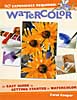
Carol CooperCarol Cooper's book, Watercolor: No Experience Required, is an easy guide to getting started in watercolor. The supply list is basic and very good, except that it allows cheap pan colors, which I don't think is a good idea, even for beginners. Also, the beginner doesn't need so many colors; a maximum of seven should do the job, if they're the right colors. A workspace layout is shown that could be helpful to the beginner. There are numerous well-done illustrations, including hands-on photos. Demos are simple and doable. Subject matter includes landscape, flowers, still life and textures. Composition is given very little attention, but the section on color, though brief, is clear. This is a good basic book that doesn't confuse beginners with fancy techniques and tricks.
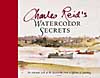
Charles ReidWatercolor Secrets by Charles Reid is the work of a master painter. The book is filled with many sidebars of tips and tricks for Reid's spontaneous style of painting and is lavishly illustrated with sketches from his watercolor sketchbooks. His distinctive, personal approach is clear throughout in subjects of all kinds, both indoor and plein air. His supply list is brief, but more than adequate. This beautiful book is not for the beginner in watercolor technique, but it's a joy to behold.
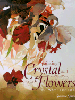
susanna spannPainting Crystal and Flowers in Watercolor by Susanna Spann is filled with her stunning artwork and many mini-demos throughout. The book includes a detailed list of supplies, but it's clear from the beginning that this book is not for the spontaneous watercolor painter. The primary subject is special effects in still life using watercolor. Design and color are touched upon, along with painting from photographs, marketing and exhibiting. The strongest point in Spann's book, in my opinion, aside from her magnificent artwork, is her emphasis on doing thumbnail sketches to plan paintings.

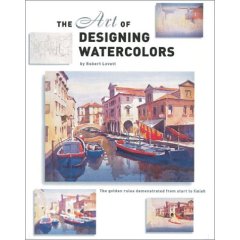
John LovettJohn Lovett's The Art of Designing Watercolors is subtitled "All you need to know to create more powerful paintings." The book contains demos and many illustrations throughout with an emphasis on design. From the "hows and whys of design" to tools of design (the elements and principles) and design tools in action, Lovett covers the essentials very well. Only one page is designated for supplies, so beginners need to look elsewhere to understand the basics. However, this book is a good one for an artist who needs to understand how to incorporate structure into pictures for more effective expression.
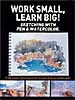
work small learn bigWork Small, Learn Big!: Sketching with Pen & Watercolor is an International Artist Publishers' collection of preparatory studies by seventeen artists from around the world. The book is a compilation of sketches backed up by photographs and slides, emphasizing the importance of these preliminary works to the execution of fine artwork. There are numerous illustrations and step-by-step demos. Each artist has distinctive choices of materials and media. Styles range from loose and spontaneous to highly detailed with many notes. Selling tips and artists' bios are included. One of the most important messages in the book is that "Mistakes don't Matter" in the sketchbook.

Thanks to George Bussinger at McCallister's Art Store for making these books available for review.

Labels: , , , , , , , , , , , , , , ,

Sunday, February 05, 2006

I would like to study children's drawings. That's where the truth lies, without a doubt. --André Derain

Labels: , , , ,

Wednesday, February 01, 2006

You can draw!

Charley Parker posted a great blog today on Betty Edwards' Drawing on the Right Side of the Brain. If you think you have no talent or creativity, read Charley's blog and then get that book. You can use it as a self-study course if you're really motivated to learn to draw. My son taught himself to draw this way when he was in his thirties.

Labels: , , , ,

Thursday, January 12, 2006

Way cool drawing of a woman

This is a fantastic movie of a line drawing of a model. Watch it to the end!

Labels: ,

Tuesday, October 11, 2005

Van Gogh's drawings at the Met

Here's a rare opportunity to see the seldom displayed drawings of van Gogh. Read the review in the New York Times for details on the exhibit opening next Tuesday, October 18:

http://www.nytimes.com/2005/10/11/arts/design/11gogh.html

Labels: , , ,