l s

Saturday, July 25, 2009

Mary Todd Beam's Creative Edge

Another wonderful book for mixed-media artists from Mary Todd Beam, The Creative Edge: exercises to celebrate your creative self, has been published by North Light books (2009). Filled with beautiful illustrations of finished art, the book is also packed with hands-on demonstrations and information on tools and materials. The lay-flat spiral binding makes it easy to use while following the techniques instruction. In addition all this, Beam offers inspiration to the artist, something lacking in many art instruction books. Her table of contents includes: Claiming Your Creative Edge; The Tactile Edge; The Emotional Edge; The Symbolic Edge; The Dynamic Edge; Nature's Edge; The Soul's Edge; The Edge Around Us; and The Human Edge. Whew! What great stuff! If you want to try mixed-media painting, The Creative Edge is a good place to start. Mary's earlier book, Celebrate Your Creative Self: More than 25 exercises to unleash the artist within (North Light, 2001) is also a good handbook on mixed-media painting.

Labels: , , ,

Tuesday, March 17, 2009

Taos creative Photoshoppers


Jerry Walter and Rick Finney continue to amaze me with their digital photographs altered in Photoshop, shown here. I asked Rick to send me some information on his process in the florals, and I confess it's way beyond me: gradients, masks, layers, frames, hyper-tiling and watercolor effects. Jerry's soft image is a watercolor effect. I offer these images to give you an idea of what creative artists can do with Photoshop. I love painterly images where distinctions between painting and photography disappear.

Labels: , ,

Friday, January 23, 2009

Book reviews--new books on acrylics

There are a lot of books on making art with acrylic paints, but until now I hadn't found any that provided useful information about the different acrylic mediums available. These two books fit the bill for me and now have a permanent place on the bookshelf in my studio. I use acrylic mediums mostly for collage, and now feel I can use them more effectively and branch out into textures and other applications.

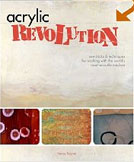
Nancy Reyner's book was released by North Light early in 2008. Acrylic Revolution: New tricks and techniques for working with the world's most versatile medium provides information on setting up tools and materials for working with acrylics, along with a comprehensive glossary. This is a "techniques book," with detailed information and illustrations using different acrylic viscosity and textures. A few paintings by various artists are included in a gallery, showing different approaches to painting with acrylics. Reyner explains the behavior of the mediums, how to deal with quick drying paints and mediums, and how to finish the artwork with varnish, a step many artists skip over. I especially like Guy Kelly's design, which unifies the pages of complex demos and hands-on photos.


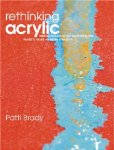
Patti Brady's book, Rethinking Acrylics: Radical solutions for exploiting the world's most versatile medium. (North Light, 2009) is worth the price just for the chart on page 23, showing the effects of 15 different mediums, with a short description telling in a nutshell what each does. I also like the information on how acrylic paints are made, although I know a lot of artists aren't interested in this. Brady provides information and techniques not included in the Reyner book, as well as demonstrations by 28 acrylic artists. Want to print acrylic paint film (skins) in your ink jet printer? Need to know more about interference and metallic acrylic paints? Want to try encaustic with acrylic? It's all here, and more.

Both artists are active in the Working Artist Program of Golden Artist Colors, Inc., but the books may be used by artists who work with other products.

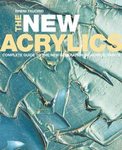
Another book on acrylics, which I haven't read, seems to be popular with painters: Rheni Tauchid's The New Acrylics: Complete Guide to the New Generation of Acrylic Paints. (Watson-Guptill, 2005.) The author is employed by Tri-Art, a Canadian paint manufacturer. If you've used this book, please leave a comment telling us about it.

Labels: , ,

Wednesday, January 02, 2008

Finally starting the New Year

My new year never seems to begin until January 2. New Year's Day is always crowded with tasks to wind up the old year, like taking down the Christmas decorations, doing the year's-end inventory, getting the bills paid. I'm looking forward to a wonderful 2008, teaching lots of workshops and seeing my new book in print. The year 2007 was a mixed bag, a lot of hard work and some highs and lows. The highest point was the birth of our grandson, who continues to be a delight when I babysit four days a week. The lowest point was the loss of my best friend. After thirty years of friendship, it ended on a sour note in February, leaving me shocked and grieving.

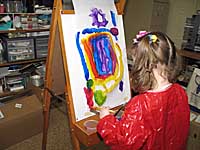
Our granddaughter slept over Saturday night and did her first painting on her new Christmas easel. It was amazing watching her step up to the easel with such confidence and begin painting. I set out the three primaries and purple, her favorite color. It was the first color she chose, then she added in all the others, mixing to make orange and green. She switched back and forth between her left and right hands. When she finished her painting, she told me it was a "rainbow cave." Jenna is going on five. I wish I had been that confident at such a tender age. All I remember of art from those days is coloring inside the lines.

Labels: , , , ,

Thursday, July 12, 2007

Why do you paint or draw or write?

A friend recently asked me this question, specifically about writing. When artists and writers get together with their colleagues, this subject often comes up. Naturally there are many answers to the question, but the thing that always intrigues me is that so many believe that their response is the only "right" one and feel somehow morally superior to others who have different ideas. Here are some typical responses:

I paint or draw or write because:
1. I feel I have something to say and want to share it.
2. I am compelled to so I can feel fulfilled.
3. It pleases me and makes me happy.
4. It's my job.
5. ....Just because.

Is one of these the right answer? Of course not; there isn't one. There are a million reasons, one for every person who answers the question. Make up one that suits you and don't feel you have to explain or defend it. The only person who has to understand your motivation is you. And that is very important.

It's equally important to decide for yourself how you'll approach your tasks in painting, drawing, writing. Once again, there isn't a "right" way. Some people plan extensively before beginning, others meditate to get in the mood, and still others jump in and work without a plan. But here are some thoughts to help stimulate your creative juices regardless of your modus operandi.

First of all, do what you love. Henry Miller said, "Paint as you like and die happy." What more can I say?

Avoid distractions. Wow, a tough one, but it can be done. I stole time while my four children were in school to develop my art and write my books. It also means making choices about what NOT to do.

Get into your Creative Zone and stay there as long as you are working. Betty Edwards has some great techniques for accomplishing this in her right-brain drawing books.

Reward yourself. Sure, you can party when the project is finished, but give yourself a pat on the back or a treat whenever you put in time on it. Everything you do should be acknowledged as an accomplishment.

And finally, treat yourself with respect and admiration, regardless of what others might say about your work. It's yours--own it and love it.

"Teachers open the door, but you must enter by yourself."
Chinese proverb

Labels: , ,

Thursday, February 08, 2007

Portrait Commissions

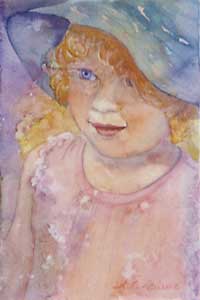
A friend of mine recently had a portrait commission rejected. The person she did it for was extremely rude in calling it a "caricature." Of course, the artist was disappointed and hurt at the reaction. I seriously doubt that she will want to try to make it right. I wouldn't, under the circumstances. I have great admiration for artists who do commissions of any kind, because there is so much pressure to perform with a commission. The stress is unbelievable. It's even worse for portraits, where a likeness is expected, and rightly so. One of my instructors told us not to worry about the likeness, as long as the portrait looked human. Good advice. Unless it's a commission. This portrait of my Little Artist isn't a perfect likeness, but it captures her spirit.

I did "house portraits" for awhile early on, but I had learned a few tricks of the trade from a friend who was constantly pestered by clients who wanted this and that changed in finished paintings, even though the elements they wanted weren't in the photos they provided. First of all, get a non-refundable deposit. Then, make it clear that you're going to paint it your way, and if they don't like it, they don't have to take it (but no deposit back). Then I would do a painting I liked and show it to them. Once in awhile I would provide preliminary sketches for approval. I never had a commission turned down. I was also extremely selective about what subjects I would paint on commission. It had to be a historic home or something with character that I would enjoy painting. I deviated from that once when my sister asked me to copy a watercolor of her home that I had given her as a gift. She wanted an original for each of her three children. I got around that one by using the same drawing three times--in different seasons. I think that was the last commission I ever did and I'm not likely to do another.

Labels: , , , , ,

Monday, January 22, 2007

Emily Carr on painting a landscape

I am painting a flat landscape, low-lying hills with an expanding sky. What am I after--crush and exaltation? It is not a landscape and not sky but something outside and beyond the enclosed forms. I grasp for a thing and a place one cannot see with these eyes, only very very faintly with one's higher eyes. I begin to see that everything is perfectly balanced so that what one borrows one must pay back in some form or another, that everything has its own place but is interdependent on the rest, that a picture, like life, must also have perfect balance. Every part of it also is dependent on the whole and the whole is dependent on every part. It is a swinging rhythm of thought, swaying back and forth, leading up to, suggesting, waiting, urging the unordered statement to come forth and proclaim itself, voicing the notes from its very soul to be caught up and echoed by other souls, filling space and at the same time leaving space, shouting but silent. Oh, to be still enough to hear and see and know the glory of the sky and earth and sea!

Labels: , ,

Friday, December 08, 2006

More Art Book Reviews

ranson skiesRon Ranson on Skies (Studio Vista, 1998) is for landscape painters in any medium who love to feature skies. The book shows techniques mostly in watercolor, but does include instruction on some other media, along with excellent photographs of cloud formations and many wonderful sky paintings. This is a great reference for landscape painters. I'm a sky freak myself and love paging through this book to look at the photos and paintings.


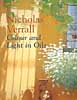
color&light in oilsColour and Light in Oils by Nicholas Verrall and Robin Capon (Batsford, 2004). The pages on Understanding Oils are very informative and user friendly, even to a beginner in oils like me. There aren't many swatches for visual comprehension, but the artwork throughout is dazzling, but not overwhelming as a possible goal for an artist to strive for. Verrall and Capon cover painting color and light, different types of subject matter and the working process, with a few demos scattered throughout the book in two or three stages.


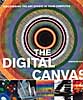
digital canvasThe Digital Canvas: Discovering the Art Studio in Your Computer. (Abrams Studio, 2006.) This book by Jonathan Raimes almost makes me want to sell all my painting gear and just play with my computer. It's dazzling and I really think I could do it with this book as my text. The book has page after page of brilliant color effects with simple computer screen shots to show the tools for achieving them. Probably not for beginners, but definitely for creative computer artists.


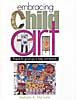
embracing child artBarbara McGuire has written Embracing Child Art. (Krause, 2001) to give adults ideas on how to encourage a child's natural creativity and ultimately help them to make a few treasured objects. There are wonderful suggestions for guiding Little Artists and helping them create projects with their own art to last a lifetime. The best part of the book is page after page of wonderful examples of child art.


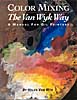
van wyk color-mixingHelen Van Wyk's Color Mixing the Van Wyk Way: A Manual for Oil Painters (Art Instruction Associates, 2000) has quickly become a classic since it was first published in 1995. She keeps the color concepts simple, emphasizing primarily color temperature and comparing a few basic palette choices for simple still lifes and portraits. This book would help beginners in oils to understand their colors and master color mixing of specific pigments.


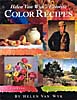
van wyk color recipesHelen Van Wyk's Favorite Color Recipes. (Art Instruction Associates, 2000) expands somewhat on the previous book and introduces a greater variety of subjects with color recipes in oil paints that are her recommendations for painting them. This book ale effects in this book are understood, the painter would be well advised to develop a more personal palette of colors.


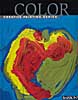
barron's colorBarron's Creative Painting Series: Color. (2005) by Gemma Guasch and Josep Asunción contains a wealth of useful information on color and numerous beautiful reproductions of masterpieces to illustrate the use of color throughout art history. I love that part of the book, but I don't think the demo paintings do it justice. Maybe it's just the design of the book. Check it out, though, because it has a lot to offer.

Once again, thanks to McCallister's Art Store for providing books for my reviews.

Labels: , , , , , , , , , , , , , , , ,

Wednesday, December 06, 2006

Art Book Reviews

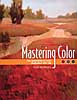
Vicky Murry's Mastering Color: The essentials of color illustrated with oils. (North Light, 2006) This book offers solid color theory applicable to all media. The book is beautifully illustrated with swatches and paintings by the author. The section on supplies and equipment is concise with a nice comparison of different ways oil-painting techniques--direct, indirect, plein air and alla prima. The basic palette is limited and very effective. There's a nice little section on color schemes, a subject often neglected in painting books. Murry explores individual colors and introduces a few design concepts, with a variety of helpful hints along the way.


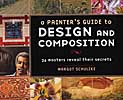
A Painter's Guide to Design and Composition by Margot Schulzke (North Light, 2006)includes the work of twenty-six contemporary masters who describe their process of designing their artwork. This is a beautiful book with lots of demos and color illustrations, but I find it a little confusing. The design-and-composition objective tends to get lost in the plethora of different techniques. I enjoyed reading it, but probably won't include it in my personal art library.


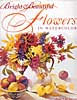
I love Jean Uhl Spicer's book, Bright & Beautiful Flowers in Watercolor (North Light, 2004.) If I were a flower painter, this is how I would want to do it. Spicer's supplies and equipment section is concise and complete. Her basic palette of colors is fairly limited and well balanced. The chapter on color covers the basics in such a way that I think beginners can grasp the concepts quickly. The chapter on composition isn't quite as accessible, but the remainder of the book, which includes various transparent watercolor techniques, tips and demonstrations, is very good. Way to go, Jean.

Labels: , , , , , , , , , ,

Tuesday, December 05, 2006

Art haiku by Herb Reed

Painting is like life.
If you get your values right,
The rest is easy.

Labels: , , ,

Wednesday, August 30, 2006

Catching up on my reading

I've been so busy with my own book that I've fallen behind in writing reviews for books I've read. So I'm in "review mode." I posted two reviews this morning, but I'm up to seven now, so scroll down to see what's new.
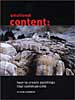
Gerald Brommer In Emotional Content: How to Create Paintings That Communicate Gerald Brommer discusses the differences between classic, intellectual and romantic approaches to painting. The key question is "What do you feel?" for the artist who wishes to paint more expressively. Select and edit your subject, making mini-thumbnails to record your impressions. Brommer emphasizes the importance of sketching to explore the subject, using color and temperature dominance and tonal values and textures. Watercolor collage is used in demonstrations. A sense of place, mood, weather and season can all contribute to the emotional content of your work. Brommer's books are always filled with useful tips and techniques.
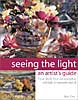
Betty CarrSeeing the Light: An Artist's Guide. by Betty Carr shows you how to create depth, form and atmospheric light in watercolor and oil paints. Carr is adept at both, as you can see from this beautifully illustrated book. Supply lists are detailed for both watercolors and oils, including advice on plein air necessities. In both media there are exercises and step-by-step demos that are clear and easy to follow. Carr advises you to learn to think in three dimensions, to observe light on form and to use value sketches to help you see light and shadow on a subject. She recommends simplification of shapes and value patterns. This is a good book withi lots of information and helpful tips.
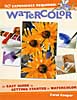
Carol CooperCarol Cooper's book, Watercolor: No Experience Required, is an easy guide to getting started in watercolor. The supply list is basic and very good, except that it allows cheap pan colors, which I don't think is a good idea, even for beginners. Also, the beginner doesn't need so many colors; a maximum of seven should do the job, if they're the right colors. A workspace layout is shown that could be helpful to the beginner. There are numerous well-done illustrations, including hands-on photos. Demos are simple and doable. Subject matter includes landscape, flowers, still life and textures. Composition is given very little attention, but the section on color, though brief, is clear. This is a good basic book that doesn't confuse beginners with fancy techniques and tricks.
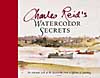
Charles ReidWatercolor Secrets by Charles Reid is the work of a master painter. The book is filled with many sidebars of tips and tricks for Reid's spontaneous style of painting and is lavishly illustrated with sketches from his watercolor sketchbooks. His distinctive, personal approach is clear throughout in subjects of all kinds, both indoor and plein air. His supply list is brief, but more than adequate. This beautiful book is not for the beginner in watercolor technique, but it's a joy to behold.
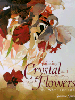
susanna spannPainting Crystal and Flowers in Watercolor by Susanna Spann is filled with her stunning artwork and many mini-demos throughout. The book includes a detailed list of supplies, but it's clear from the beginning that this book is not for the spontaneous watercolor painter. The primary subject is special effects in still life using watercolor. Design and color are touched upon, along with painting from photographs, marketing and exhibiting. The strongest point in Spann's book, in my opinion, aside from her magnificent artwork, is her emphasis on doing thumbnail sketches to plan paintings.

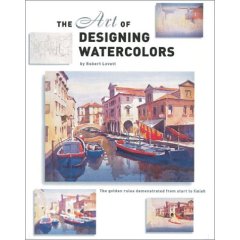
John LovettJohn Lovett's The Art of Designing Watercolors is subtitled "All you need to know to create more powerful paintings." The book contains demos and many illustrations throughout with an emphasis on design. From the "hows and whys of design" to tools of design (the elements and principles) and design tools in action, Lovett covers the essentials very well. Only one page is designated for supplies, so beginners need to look elsewhere to understand the basics. However, this book is a good one for an artist who needs to understand how to incorporate structure into pictures for more effective expression.
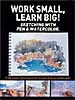
work small learn bigWork Small, Learn Big!: Sketching with Pen & Watercolor is an International Artist Publishers' collection of preparatory studies by seventeen artists from around the world. The book is a compilation of sketches backed up by photographs and slides, emphasizing the importance of these preliminary works to the execution of fine artwork. There are numerous illustrations and step-by-step demos. Each artist has distinctive choices of materials and media. Styles range from loose and spontaneous to highly detailed with many notes. Selling tips and artists' bios are included. One of the most important messages in the book is that "Mistakes don't Matter" in the sketchbook.

Thanks to George Bussinger at McCallister's Art Store for making these books available for review.

Labels: , , , , , , , , , , , , , , ,

Sunday, July 09, 2006

Aaron--a computer that (who?) paints

Several years ago my son and I went to the Boston Computer Museum to see Aaron at work, arguably the first artist-computer (as opposed to computer-artist). It was fascinating to watch. Aaron is the brain child of Harold Cohen. If my memory serves me, the Aaron we saw was larger than the one shown in the article cited above. It painted portraits as well as still lifes and landscapes and had a distinctive style similar to that of the inventor. As the huge sheet of paper inched its way across a sort of platen, mechanical arms swung around the page, periodically moving to the jars of paint to refresh or change color. Sometimes there would be a long pause, when I imagined a mechanical or digital brain trying to decide what to paint next. I looked around, but didn't see a curtained screen with a mad-magician frantically operating the controls, a la Wizard of Oz. To learn more about Aaron, Google: Aaron computer paintings. As for the link above, it took me awhile to figure out what the writer meant about Aaron seizing animals, until I recalled that a few years back a museum exhibited a dead cow preserved in formaldehyde as an avant garde artwork. I hope Aaron sticks to painting.

Labels: , ,

Tuesday, February 07, 2006

Painting must do for the eyes what poetry does for the ears. --Antoine Coypel (1720)

Labels: , , ,

Saturday, February 04, 2006

Painting is a state of being...Painting is self-discovery. Every good painter paints what he is. --Jackson Pollock

Labels: , , , ,

Tuesday, January 17, 2006

Painting is just another way of keeping a diary. --Pablo Picasso

Labels: , , ,

Saturday, December 03, 2005

There are painters who transform the sun into a yellow spot, but there are others who, thanks to their art and intelligence, transform a yellow spot into the sun. --Pablo Picasso

Labels: , , ,

Monday, November 28, 2005

How varied are the delights which may be gained by those who enter hopefully and thoughtfully upon the pathway of painting; how enriched they will be in their daily vision, how fortified in their independence, how happy in their leisure. --Winston Spencer Churchill

Labels: , , ,

Saturday, November 12, 2005

Painters are concerned with ideas, not with an anecdotal inventory of visual details. --Frederick Gore

Labels: , ,

Friday, October 28, 2005

I hope with all my heart that there will be painting in heaven. --Jean-Baptiste Camille Corot

Labels: , ,