Rising Sun Collage Workshop 2012

Labels: acrylics, collage art techniques, collage workshop, creativity, fabric collage, new creative collage techniques, workshop
posted by Nita at 12:13 PM
4 comments


Nita Leland's blog is about her creative and family life, including book reviews, art links and essays on color, creativity, watercolor, writing, teaching and other subjects.
Labels: acrylics, collage art techniques, collage workshop, creativity, fabric collage, new creative collage techniques, workshop
posted by Nita at 12:13 PM
4 comments
Labels: acrylics, ampersand. merle rosen, claybord, Golden paints
posted by Nita at 9:35 AM
0 comments
 I've just finished reading Rheni Tauchid's The New Acrylics: Complete Guide to the New Generation of Acrylic Paints. (Watson-Guptill, 2005). I like this book very much, even though it doesn't have some of the acrylic mediums that have become available since the book was published in 2005. It's really hard to keep up with these new products, since it takes about two years for a book to be written and produced for publication. Nevertheless, the book is an excellent reference for painters in acrylics. I like the technical information on paints (not all artists care about this as I do, though) and I especially like the illustrations of techniques, the samplers and demos that show how different techniques look during the process of application. There is some very fine artwork interspersed on the pages, but the emphasis is clearly on techniques and materials. I'm going to add this book to my collection, as I find it to be both informative and inspirational, just because of the exciting possibilities shown through the demo photos.
  Nancy Reyner's book was released by North Light early in 2008. Acrylic Revolution: New tricks and techniques for working with the world's most versatile medium provides information on setting up tools and materials for working with acrylics, along with a comprehensive glossary. This is a "techniques book," with detailed information and illustrations using different acrylic viscosity and textures. A few paintings by various artists are included in a gallery, showing different approaches to painting with acrylics. Reyner explains the behavior of the mediums, how to deal with quick drying paints and mediums, and how to finish the artwork with varnish, a step many artists skip over. I especially like Guy Kelly's design, which unifies the pages of complex demos and hands-on photos.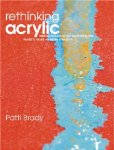
Labels: acrylic revolution, acrylics, nancy reyner, patti brady, quilts, rethinking acrylics, rheni tauchid, the new acrylics
posted by Nita at 5:49 PM
0 comments
Labels: acrylics, freezing, Golden paints, paints
posted by Nita at 12:09 PM
0 comments
Nancy Reyner's book was released by North Light early in 2008. Acrylic Revolution: New tricks and techniques for working with the world's most versatile medium provides information on setting up tools and materials for working with acrylics, along with a comprehensive glossary. This is a "techniques book," with detailed information and illustrations using different acrylic viscosity and textures. A few paintings by various artists are included in a gallery, showing different approaches to painting with acrylics. Reyner explains the behavior of the mediums, how to deal with quick drying paints and mediums, and how to finish the artwork with varnish, a step many artists skip over. I especially like Guy Kelly's design, which unifies the pages of complex demos and hands-on photos.Another book on acrylics, which I haven't read, seems to be popular with painters: Rheni Tauchid's The New Acrylics: Complete Guide to the New Generation of Acrylic Paints. (Watson-Guptill, 2005.) The author is employed by Tri-Art, a Canadian paint manufacturer. If you've used this book, please leave a comment telling us about it.Labels: acrylics, book reviews, painting
posted by Nita at 5:06 PM
5 comments
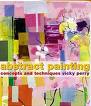 Abstract Painting by Vicky Perry ties historical abstraction in with modern techniques in this colorful book. It isn't a how-to book in the sense of step-by-step demos, but helps the artist to see how abstraction has developed and some directions the artist might take to explore abstract concepts in oils and acrylics. The emphasis is on non-objective abstraction, leaning more toward expressionist organic design than geometric color/field. Probably not for beginners, but a very interesting book for someone thinking to explore this genre. Another book I have learned a great deal from is Painting and Understanding Abstract Art.
Labels: abstract art, abstraction, acrylics, book reviews, oil painting
posted by Nita at 12:25 PM
0 comments

I've been painting and teaching watercolor since the 70s. My bestselling books on color, collage and creativity are published by North Light Books. Please visit my website www.nitaleland.com .