l s

Saturday, November 04, 2006

First Watercolor Lesson

Our Little Artist, almost four now, received a tiny kit of watercolor paints as a party favor this week. Her parents said she loved them and enjoyed painting pictures they printed out from the computer for her. Then they wheedled me into babysitting by saying Jenna was excited about painting with Grammy. Ha! So I picked her up yesterday and we painted together. Mostly she painted and I watched. She really does love it, but especially when I let her use my little pocket palette and small brushes (sable, no less). It took her about a fraction of a second to see the difference. I had some small, blank sketchbook pages that she puddled colors on and eventually she carefully made a big red blob that she said was "lips" and added three spots for nose and eyes. Her first watercolor portrait. I'm so proud!

Labels: , , , ,

Wednesday, October 18, 2006

Here's a link to photos of the "Beginners & Beyond" watercolor exhibition. Scroll down for a closer look at some of the paintings.

Labels: , , ,

Friday, October 13, 2006

Ready to open the show

Six or so students showed up to finish hanging the show--cleaned the glass, straightened the paintings, etc. The show looks great. There are nearly sixty paintings from about twenty-five artists. Quite a few in the class had never picked up a watercolor brush--or any brush, for that matter--before taking my "Watercolor for the Terrified" class. It's amazing what they've accomplished. Others have greatly improved their basic skills since joining the class and all are beginning to grasp the rudiments of design and composition. People seem to think that a seniors' watercolor class is some kind of "art therapy" group, but this is a lively, challenging and growing bunch of people who have the potential to become every bit as good as they could ever wish to be. A passer-by watched me arranging paintings on Wednesday and said, "Those aren't beginners. I had to do black-and-white studies when I took your beginner class." I waved at the paintings and said, "So did they." Every artist was a beginner once. The ones who succeed do so because they want to do it and believe they can.

Labels: , , ,

Friday, September 08, 2006

Mini Book Reviews

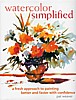
  • Having had an opportunity recently to take a second look at watercolor simplifiedWatercolor Simplified by Pat Weaver, I decided to update an earlier review. As I said before, the book may be a bit intimidating for beginners. The photos of the artist's studio are a bit too much for a "simplified" approach to watercolor. The supplies are basic, but the text seems to assume that you already know how to use watercolor. There are discussions of the Golden Mean and a good section on drawing, with emphasis on planning and value sketching. More for intermediates, I think, but rich with useful material for that level. I do admire Weaver's bold way with watercolor.


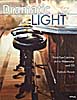
  • dramatic_lightDramatic Light: Paint Eye-Catching Art in Watercolor and Oil strikes me as a good book for artists looking to incorporate light effects in their work without laboring over every facet in a crystal vase or every ripple in the water. In other words, Patrick Howe makes painting light doable for most painters in watercolor and oil. After a good section on Preparing and Planning, which includes many tips and techniques, Howe covers Transparency, Translucence, Luminosity, Light and Reflection with demonstrations and mini-demos. The text is easy to understand and the demos illustrate the text well. The conclusion includes material on the business of art. This one is a keeper.
  • Labels: , , , , , , , ,

    Wednesday, August 30, 2006

    Catching up on my reading

    I've been so busy with my own book that I've fallen behind in writing reviews for books I've read. So I'm in "review mode." I posted two reviews this morning, but I'm up to seven now, so scroll down to see what's new.
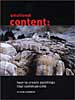
    Gerald Brommer In Emotional Content: How to Create Paintings That Communicate Gerald Brommer discusses the differences between classic, intellectual and romantic approaches to painting. The key question is "What do you feel?" for the artist who wishes to paint more expressively. Select and edit your subject, making mini-thumbnails to record your impressions. Brommer emphasizes the importance of sketching to explore the subject, using color and temperature dominance and tonal values and textures. Watercolor collage is used in demonstrations. A sense of place, mood, weather and season can all contribute to the emotional content of your work. Brommer's books are always filled with useful tips and techniques.
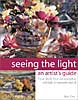
    Betty CarrSeeing the Light: An Artist's Guide. by Betty Carr shows you how to create depth, form and atmospheric light in watercolor and oil paints. Carr is adept at both, as you can see from this beautifully illustrated book. Supply lists are detailed for both watercolors and oils, including advice on plein air necessities. In both media there are exercises and step-by-step demos that are clear and easy to follow. Carr advises you to learn to think in three dimensions, to observe light on form and to use value sketches to help you see light and shadow on a subject. She recommends simplification of shapes and value patterns. This is a good book withi lots of information and helpful tips.
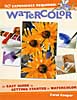
    Carol CooperCarol Cooper's book, Watercolor: No Experience Required, is an easy guide to getting started in watercolor. The supply list is basic and very good, except that it allows cheap pan colors, which I don't think is a good idea, even for beginners. Also, the beginner doesn't need so many colors; a maximum of seven should do the job, if they're the right colors. A workspace layout is shown that could be helpful to the beginner. There are numerous well-done illustrations, including hands-on photos. Demos are simple and doable. Subject matter includes landscape, flowers, still life and textures. Composition is given very little attention, but the section on color, though brief, is clear. This is a good basic book that doesn't confuse beginners with fancy techniques and tricks.
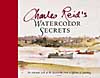
    Charles ReidWatercolor Secrets by Charles Reid is the work of a master painter. The book is filled with many sidebars of tips and tricks for Reid's spontaneous style of painting and is lavishly illustrated with sketches from his watercolor sketchbooks. His distinctive, personal approach is clear throughout in subjects of all kinds, both indoor and plein air. His supply list is brief, but more than adequate. This beautiful book is not for the beginner in watercolor technique, but it's a joy to behold.
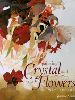
    susanna spannPainting Crystal and Flowers in Watercolor by Susanna Spann is filled with her stunning artwork and many mini-demos throughout. The book includes a detailed list of supplies, but it's clear from the beginning that this book is not for the spontaneous watercolor painter. The primary subject is special effects in still life using watercolor. Design and color are touched upon, along with painting from photographs, marketing and exhibiting. The strongest point in Spann's book, in my opinion, aside from her magnificent artwork, is her emphasis on doing thumbnail sketches to plan paintings.

    John LovettJohn Lovett's The Art of Designing Watercolors is subtitled "All you need to know to create more powerful paintings." The book contains demos and many illustrations throughout with an emphasis on design. From the "hows and whys of design" to tools of design (the elements and principles) and design tools in action, Lovett covers the essentials very well. Only one page is designated for supplies, so beginners need to look elsewhere to understand the basics. However, this book is a good one for an artist who needs to understand how to incorporate structure into pictures for more effective expression.
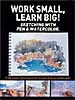
    work small learn bigWork Small, Learn Big!: Sketching with Pen & Watercolor is an International Artist Publishers' collection of preparatory studies by seventeen artists from around the world. The book is a compilation of sketches backed up by photographs and slides, emphasizing the importance of these preliminary works to the execution of fine artwork. There are numerous illustrations and step-by-step demos. Each artist has distinctive choices of materials and media. Styles range from loose and spontaneous to highly detailed with many notes. Selling tips and artists' bios are included. One of the most important messages in the book is that "Mistakes don't Matter" in the sketchbook.

    Thanks to George Bussinger at McCallister's Art Store for making these books available for review.

    Labels: , , , , , , , , , , , , , , ,

    Thursday, July 27, 2006

    Learning color mixing in watercolor


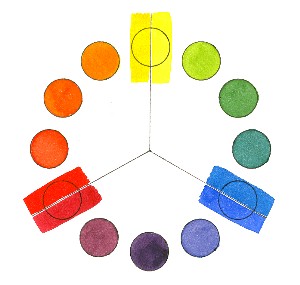
    Yesterday my beginners had their first adventure with color. They've been practicing washes and brushstrokes, textures and values for three weeks using only Payne's Gray. It's just too confusing to try to figure out color when you haven't learned to handle a brush. Because they're all doing homework and seem to be "getting it," we worked on color theory and mixing a week earlier than usual. I demonstrate my split-primary color-mixing system, painting a color wheel with six colors, while I explain the principles that make it work. They all did a pretty good job of painting their own wheels following the demo. The usual problem is using too much water and weakening the saturation of the hues on the wheel. Their homework this week is to play with colors. It will be interesting to see what they bring in for show-and-tell next week.

    Labels: , , , , , , ,

    Thursday, July 20, 2006

    Watercolor homework and pet peeves

    My small class of beginners is doing their homework. I was pleased yesterday to see so many had been practicing between classes. They'll progress rapidly that way. They're getting the washes and brushstrokes very well. The biggest problem is getting enough paint on the paper to make dark values without the paint being too opaque. One student, who missed the first two classes, showed up this week. Since I review basics every week at the start of the course for beginners, I figure she can pick up some of what she missed from that. It's hard to start in the middle with a new student. An instructor can't take time from the rest of the class to re-teach two weeks of lessons. Please, folks, if you sign up for a class, at least try to make it for the first few classes. Oh...and be on time. For every class. Now you know a couple of my pet peeves.

    Labels: , , , ,

    Thursday, July 13, 2006

    Beginning Watercolor class revisited

    Yesterday's class went well. Most of the students had exchanged their paper for something a little better and had bought a better brush. Many had even done homework and showed me their practice sheets. We did a mini-critique at the end of class and they were surprised--as most beginners are--that their first efforts didn't look too bad when you stood away from them. Of course, that's the old joke--the farther away you stand, the better they look. When they show frustration at not being able to do a perfect wash or brush stroke, I just ask them if they would be playing a sonata two weeks after their first violin lesson. They're a good-natured group, on the whole, and very encouraging to each other. That kind of atmosphere in the room seems to improve their results. One student asked me if they would have a finished picture at the end of the series. Oops! I had to explain that my classes don't work that way. I give them the basic principles and show them how to apply them using their own subject matter and sketches. It takes awhile longer to get a finished picture when you're not copying someone else's work. While I was packing up at the end of class, someone insisted that I give them homework, as I did last week. That's a good sign!

    Labels: , ,

    Thursday, July 06, 2006

    Art retailer's dilemma

    I talked to my friend George about the problems with beginners' supplies yesterday, and as I suspected, it was a combination of sticker shock and inexperience. The students did, indeed, present my list, then said they wanted the cheapest materials to fulfill the requirements. Most of the employees there know I hold high standards for supplies, but newer ones made some unacceptable substitutions. Poster paints won't do for a transparent watercolor class! I will definitely have the next class come without supplies so I can indoctrinate them before they go out to buy their materials. Maybe I should work up a chart showing the differences in quality of brushes, papers and paints to make it more convincing. I used to have McCallister's make up kits for me and the students didn't bat an eye at spending $50-60 for it, but it was a problem getting the kits together because I never know how many students I'll have until the first day. Some classes are very small, like this one (10) and some are up to 25. Can't seem to work out the logistics. Anyway, there has to be a better way to do this. Any ideas out there?

    Labels: , ,

    Wednesday, July 05, 2006

    Beginning Watercolor Advice

    Started a new beginners' class today at Hithergreen Center. A few have had some classes but were never taught basics and want foundation. That's what this class is for. I wish I could get through to students to pay attention to the supply list. In the first class I spend quite a bit of time explaining supplies. It usually turns out that some of them have bought inferior materials or think they can use old brushes and paint they bought at a garage sale. Then there are those who go to an inexperienced salesperson who sells them all the wrong things--even though presented with my list. I try to be understanding, because I know there is some resistance among beginners to invest in artists' quality paint, paper and brushes because of the expense. Maybe they won't even like watercolor once they've tried it. Okay, but they would like it better if they used the Right Stuff. So I tell them they can use the cheap paper and paint, but when it runs out, to upgrade. I'm not as tolerant of brushes. I require my beginners to learn to master one brush, a 3/4" sabeline one-stroke watercolor brush. No synthetics, no blends. You can do everything with this brush: wash, wet-in-wet, drybrush and line. And when you've mastered the brush, you can easily use any brush on the market. Maybe I shouldn't let beginners buy supplies until after the first class. Hmmm.

    Labels: , , ,

    Wednesday, December 14, 2005

    Getting serious about art

    Today I'm talking to artists young and old, amateur and professional, who exhibit art and fine crafts at local galleries and outdoor art shows--and even those who make art and don't show their work at all.

    Artists are a mixed lot, no doubt about it. I might be stretching it to call some of them artists. Don't be too quick to judge. Many are serious about their art, investing time, money and precious energy in it. Only a few have formal fine arts degrees. Such training involves exposure to many disciplines and contact with other art students that stimulates effort and competition. But many artists can't deal with the pressure of grades and a structured format. What are they to do?

    Begin--anywhere. If you are serious, you'll get where you want to go; but no one will do it for you. Find classes at your local recreation or senior center, a community college or painting workshop. Enroll in a correspondence art course or (gasp) paint along with a public TV instructor. More than one successful artist has started out painting "happy little trees."

    In 1970 my husband gave me a set of watercolor paints and this gift changed my life. I was discouraged when the local art college told me I couldn't enroll because only serious art students could take day classes. I had four children in school; night classes were not an option. I thought taking a YMCA class would be a poor substitute, but I was wrong. That class, solid in fundamental watercolor techniques, was a launching pad for me. I painted constantly, explored museums and galleries, read art instruction books and magazines and eventually took more than 70 workshops in painting, drawing and applied arts. I'm still learning new things every day.

    I'm serious about art.

    Artists like me--and possibly you--find hazards in the do-it-yourself program. Sometimes we become too single-minded about a medium or technique. We risk weak development of important skills and frequently suffer from lack of confidence. But every difficulty can be overcome--if you're serious. Anyone with normal mental and physical capabilities can master art skills. Like the characters in the Wizard of Oz, you already have inside you what you need to reach your artistic goals. You just have to believe in yourself. It takes Practice, Patience and Perseverance.

    You become a serious artist when you realize that your art education never ends.

    And it's never too late to create.

    Labels: , , ,

    Monday, October 10, 2005

    Watercolor breakthrough

    I'm just winding up an 8-week beginning watercolor course (Watercolor for the Terrified) with one more week to go. We've been through all the wash and brush drills, values, perspective, color mixing. This is a pretty typical class. Some "get it" right away and others have to work a little harder, but on the whole, during critique this afternoon I felt that everyone is catching on. They're appreciating the difference between spontaneous and overworked and have got the idea of letting colors blend rather than overmixing. I teach at a senior center and although the class is bright and active, their priorities are different from most classes. They travel, take time off, have more than the usual number of illnesses and surgeries, so it's difficult to keep the momentum going sometimes. I'm starting my fourth year at the center. In two weeks I'll be teaching an intermediate class. We'll have more challenging activities and several returning students are more accomplished watercolor painters who keep me on my toes. I enjoy the beginners, but I'm looking forward to mixing it up with the new class.

    Labels: ,