A useful design tool
 Several weeks ago when I was reading Emily Carr's writings I came across her reference to a book called How to See Modern Pictures by Ralph M. Pearson, published in 1925. Carr seemed to think highly of the book so, although I knew it wouldn't be considered "modern" today, I was curious how it might have influenced her work. I located a copy on the Internet and found it very interesting. I discovered a design tool that I think will help my students with composition.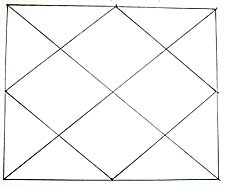
This grid consists of two diagonals from corner to corner and a rectangle or diamond shape connecting the mid-points of the four sides. The diamond-shaped areas within create optimal areas for locating major and minor focal points. The lines suggest movement and turning points across the surface. My students often place objects in dead center or to avoid that, too close to the edge. I'm hoping this grid will help them to avoid these pitfalls.
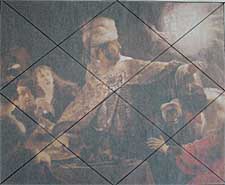
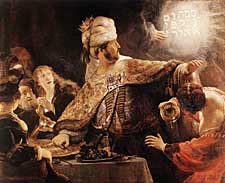
Pearson describes the division of space in such a way that you can locate your important areas within sections of a grid that is simple and easy to use. I selected a Rembrandt painting at random (The Feast of Belshazzar) to see how it might fit into the grid. It was a good fit. I've read that Renaissance artists revived the practice of using various grids, especially in laying out complicated subjects and large compositions.
I've taught both the rule-of-thirds and rabatment (See The New Creative Artist.), which locate "sweet-spots" at the intersections of lines, but I think I prefer this method of using an area rather than a spot.
Labels: center of interest, design, emily carr, focal point, grid, rembrandt, tutorials
posted by Nita at 2:10 PM
2 comments